

In today’s rapidly evolving business landscape, the intersection between innovation and leadership has never been more crucial. As we navigate the complexities of modern markets, a fundamental question arises: Should innovators lead, or should leaders innovate? To address this, it’s essential to unpack both roles and their impact on organizational success.
**The Case for Innovators Leading**

Innovators are often seen as the architects of change. They are the visionaries who conceptualize groundbreaking ideas, drive technological advancements, and challenge the status quo. Their role in leadership involves not just generating new ideas but also steering the organization towards the future.
Innovators who step into leadership roles bring several distinct advantages. They have an intrinsic understanding of the dynamics of innovation, which can foster a culture of creativity and experimentation. For instance, Steve Jobs, co-founder of Apple, exemplified how an innovator’s vision can propel a company to the forefront of technological advancement. His leadership was deeply intertwined with his innovative thinking, pushing Apple to continually redefine consumer electronics.
Moreover, innovators in leadership positions often possess a forward-looking mindset that helps them anticipate market trends and adapt strategies accordingly. This foresight can be instrumental in maintaining a competitive edge and ensuring long-term success.
**The Case for Leaders Innovating**
On the other hand, traditional leadership often emphasizes strategic direction, organizational efficiency, and team management. Leaders are typically tasked with creating a vision, setting goals, and ensuring that the organization operates smoothly towards achieving them. However, in an era where the only constant is change, the ability to innovate has become a critical aspect of leadership.
Leaders who embrace innovation as part of their role can significantly enhance their organization’s adaptability. They are not just managing the present but are also shaping the future. A notable example is Satya Nadella, CEO of Microsoft. Under his leadership, Nadella shifted Microsoft’s focus towards cloud computing and AI, driving a significant transformation that revitalized the company’s growth trajectory. His success underscores the importance of leaders who can innovate to stay relevant and competitive.
Leaders who innovate are often better equipped to inspire and mobilize their teams around new ideas. They create an environment where experimentation is encouraged, and strategic risks are embraced, leading to breakthroughs that drive the organization forward. By blending leadership with innovation, they cultivate a culture of continuous improvement and resilience.
**Striking the Right Balance**
The debate between whether innovators should lead or leaders should innovate is not about choosing one over the other but rather understanding how to integrate both elements effectively. In reality, the most successful organizations are those where innovation and leadership are not mutually exclusive but are harmoniously combined.
Leaders need to foster a culture that encourages innovation, providing the resources and support necessary for new ideas to flourish. Simultaneously, innovators need to understand the broader organizational context, ensuring their ideas are aligned with strategic goals and can be effectively implemented.
Encouraging cross-functional collaboration between leaders and innovators can also bridge gaps and drive comprehensive solutions. For example, having leaders who are well-versed in innovation can help translate visionary ideas into actionable strategies, while innovators can bring fresh perspectives to leadership decisions.
**Conclusion**
Ultimately, the question of whether innovators should lead or leaders should innovate highlights the evolving nature of leadership in the modern business environment. The key is not to compartmentalize innovation and leadership but to recognize that both are integral to an organization’s success. By blending visionary thinking with strategic execution, organizations can navigate the complexities of today’s market and position themselves for sustained growth and success.
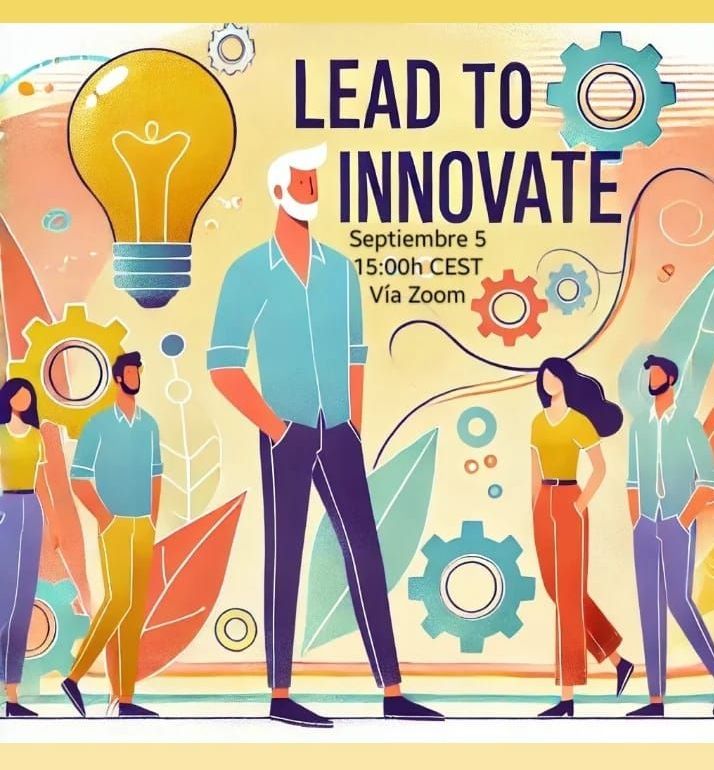
Join our Lead to Innovate conversation on September 5th at the ISPIM meeting. You can RSVP here
https://www.rethinkers.eu/event-details/liderar-para-innovar-lead-to-innovate-eng

 Certification for Work Skills and Complex Problem Solving
Leave a comment